
What is Iron Ore?
Definition and Composition
Iron ore is a crucial raw material primarily used in the production of steel, which is central to various industries, including construction, automotive, and manufacturing. Composed mainly of iron oxides, iron ore exists in various forms, each contributing to its overall utility in metallurgical processes. Common iron ore types include hematite (Fe2O3), magnetite (Fe3O4), limonite (FeO(OH)·nH2O), and siderite (FeCO3). Understanding these compositions is fundamental as they determine the processing methods required for extraction and refining.
Types of Iron Ore
The two primary types of iron ore are:
- Hematite: Known for its high iron content (around 70%), hematite is the most crucial ore for steel production. Its reddish color and heavy nature make it easy to identify.
- Magnetite: With an iron content of about 72%, magnetite is magnetic and can be processed using low-cost methods, such as magnetic separation. It is often found at great depths and is less common than hematite.
Importance in Metallurgy
The significance of iron ore in metallurgy cannot be overstated. Almost 98% of iron ore extracted globally is used in steel manufacturing, which is essential for infrastructure development, automotive industries, and consumer goods. Moreover, innovations in metallurgy strategies enhance efficiency and sustainability, leading toward a greener industry.
Mining Processes for Iron Ore
Extraction Methods
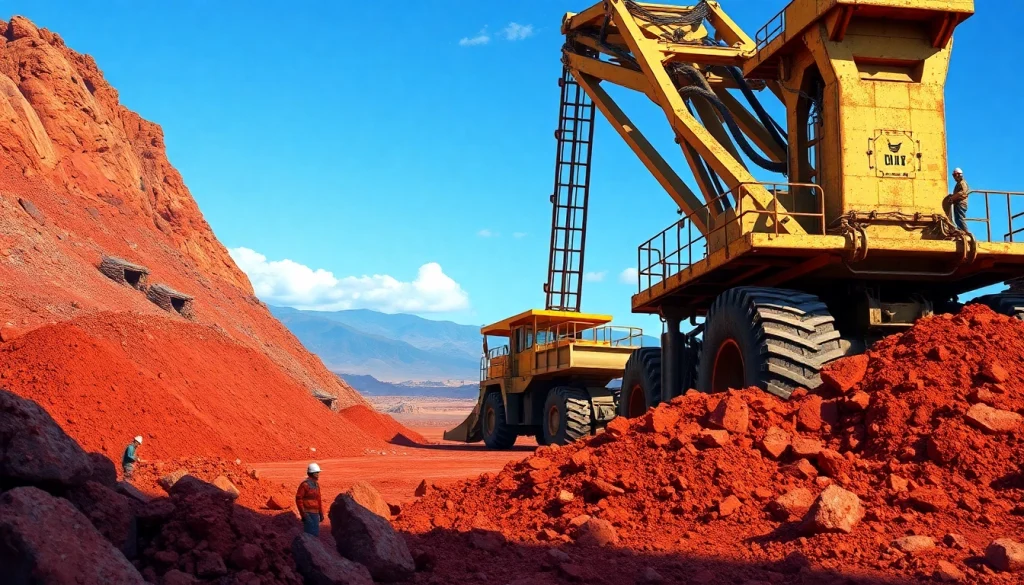
Iron ore mining involves two primary extraction methods: surface mining and underground mining. Surface mining dominates due to its cost-effectiveness and efficiency. It includes techniques like open-pit mining and strip mining, where layers of soil and rock are removed to expose the ore beneath. Underground mining is employed when ore deposits are located deep beneath the earth’s surface and involves more complex operations with a lower initial cost but higher risk.
Environmental Considerations
Mining activities significantly impact the environment. Deforestation, habitat destruction, and pollution are common issues. Sustainable mining practices, such as reducing water usage, minimizing land disruption, and using technology for waste management, are essential for mitigating these effects. Implementing responsible mining practices helps to balance industrial growth with ecological conservation.
Safety Protocols in Mining
Ensuring worker safety is paramount in iron ore mining. Implementing strict safety protocols reduces the risk of accidents and health issues among miners. These include regular safety training, efficient communication systems, and personal protective equipment (PPE). Compliance with safety regulations not only protects workers but also enhances overall productivity.
Global Market Trends for Iron Ore
Current Price Fluctuations
The iron ore market is subject to significant price fluctuations driven by supply and demand dynamics. Economic growth in emerging economies often leads to increased demand for iron ore, causing prices to rise. Conversely, increased production rates or geopolitical tensions can lead to price drops. Monitoring these trends is vital for stakeholders in the mining industry.
Major Producing Countries
The global landscape of iron ore production is dominated by a few key countries. Australia is the largest producer, followed closely by Brazil. These countries have vast reserves and advanced mining technologies, making them pivotal players in meeting global demand. Other notable producers include China, India, and Russia, each contributing to global ore supply in varying magnitudes.
Future Market Predictions
Future predictions for iron ore suggest moderate growth in demand, primarily driven by infrastructure projects worldwide. However, the emphasis on sustainable practices may reshape production methods leading to increased efficiencies and lower carbon footprints. As technologies evolve and the need for resilient industry practices mounts, the iron ore landscape is likely to witness transformative changes.
Uses of Iron Ore in Industry
Role in Steel Production
As the backbone of steel production, iron ore’s role is unparalleled. The process of converting iron ore into steel involves several stages, from extraction and smelting to refining. The quality of the resulting steel depends significantly on the ore’s purity and mineral composition, directly impacting the strength and durability of the end product.
Other Industrial Applications
Apart from steel production, iron ore also finds application in manufacturing various tools, machinery, and structures essential for industrial processes. The demand extends into sectors like energy production, construction, and transportation, where iron-containing products are critical.
Innovations in Iron Ore Utilization
Recent innovations in iron ore utilization focus on enhancing extraction efficiency and reducing environmental impacts. Techniques such as direct reduced iron (DRI) and slag recycling are gaining traction. Advances in technology, including automation and real-time monitoring, promise to further transform the sector, leading to more sustainable practices in iron ore mining and processing.
Frequently Asked Questions about Iron Ore
What is iron ore used for?
Iron ore is primarily used to produce steel, essential for construction, transportation, and manufacturing.
How is iron ore mined?
Iron ore is mined using surface or underground mining techniques, depending on the deposit location.
What affects iron ore prices?
Factors like global demand, production rates, and geopolitical issues can significantly influence iron ore prices.
Who are the largest producers of iron ore?
Australia and Brazil are the largest producers, significantly contributing to global iron ore supply.
What environmental impacts does iron ore mining have?
Mining can lead to habitat destruction, water pollution, and soil degradation, necessitating sustainable practices.